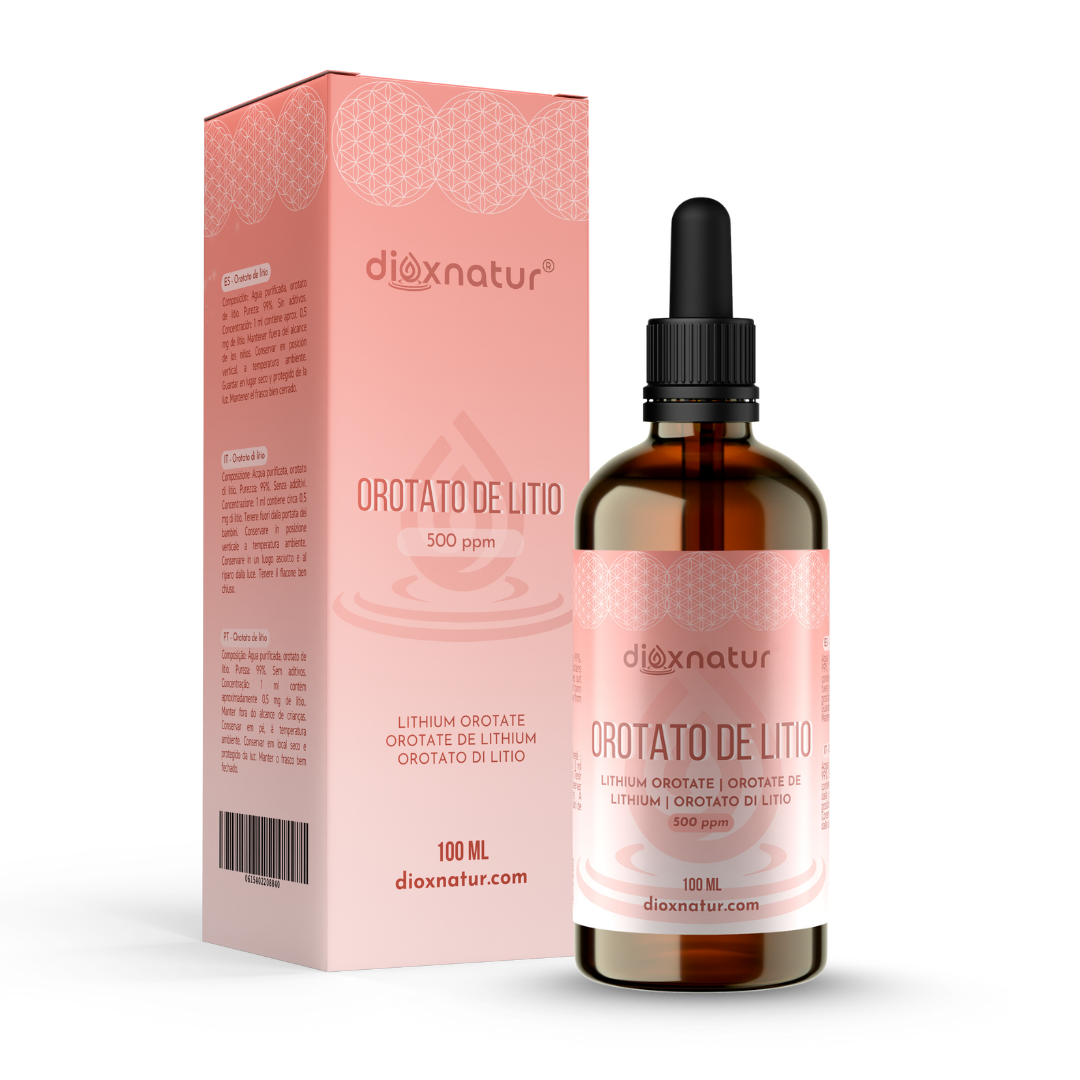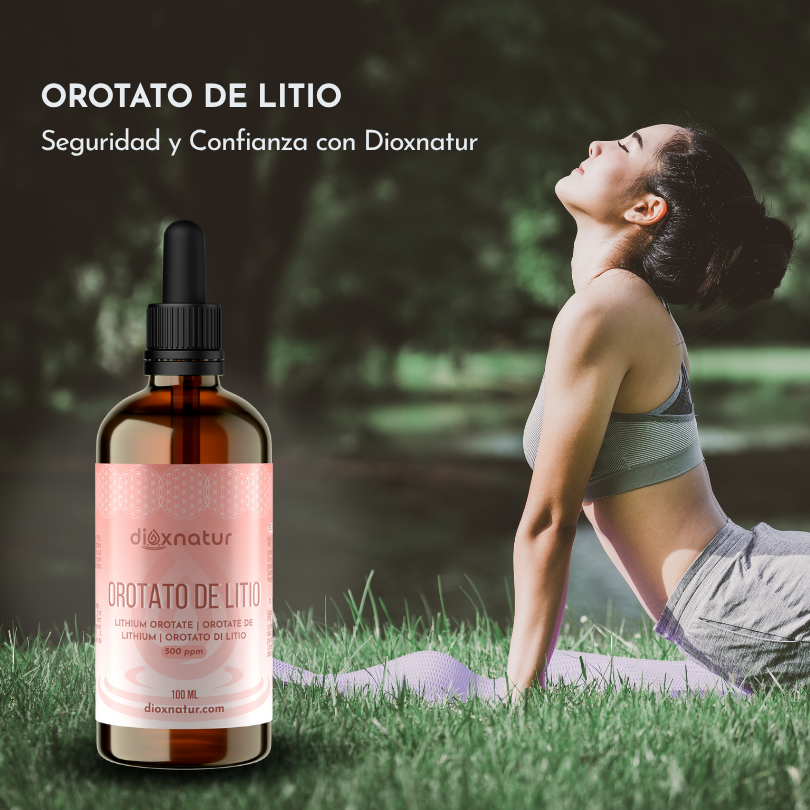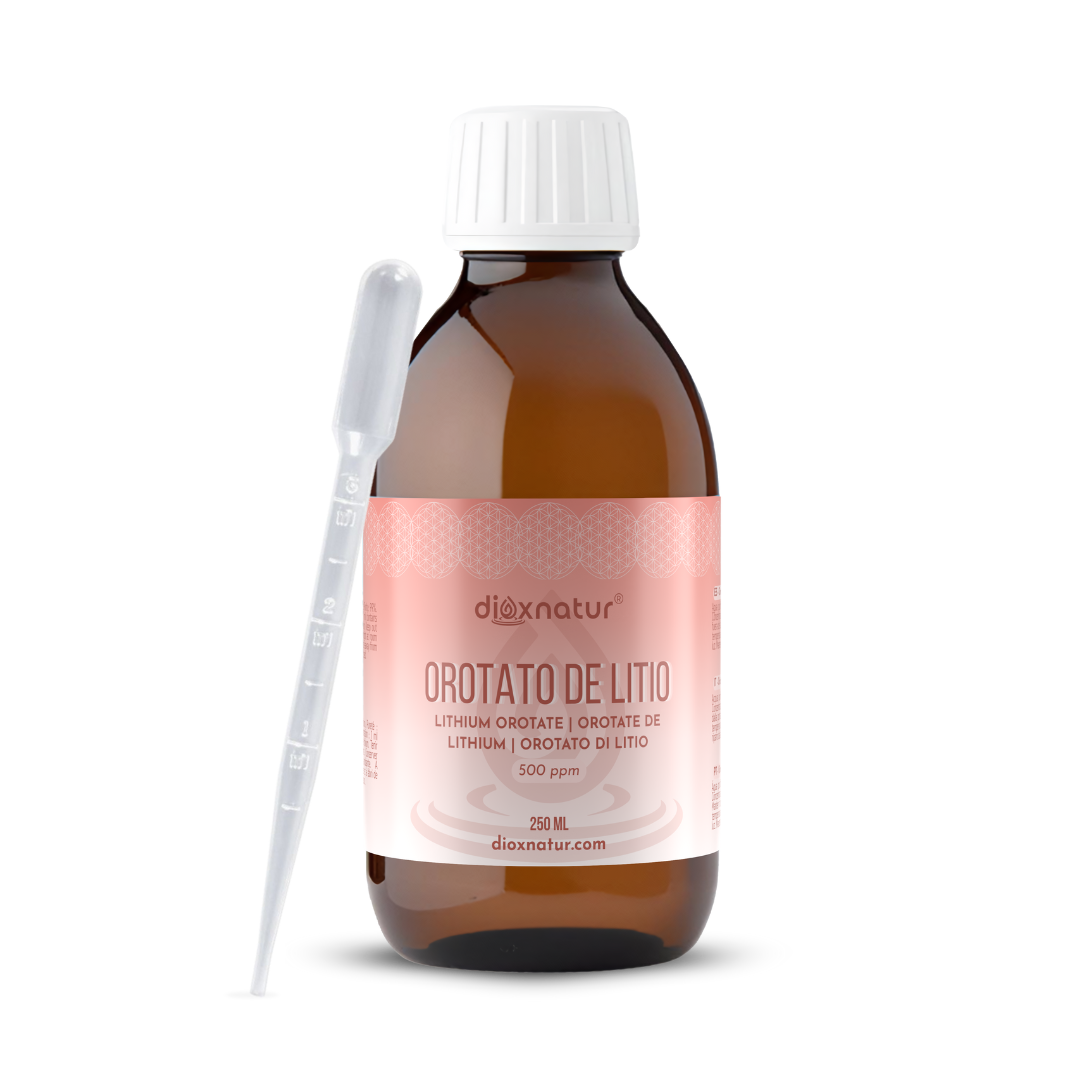


Although clinical lithium has been used for decades to treat bipolar disorder, in recent years attention has focused on lithium microdoses—especially in its orotate form— because of their potential benefits in emotional balance and behavioral control, particularly in people with ADHD (attention deficit hyperactivity disorder) .
Lithium acts as a natural regulator of the nervous system , helping to maintain stable levels of neurotransmitters that influence mood, attention, and self-control.
Does lithium orotate increase serotonin at low doses?
Yes, lithium orotate increases serotonin , the neurotransmitter that promotes calmness and emotional stability, as well as raising dopamine levels , which is involved in motivation, concentration, and impulse control, and is often impaired in ADHD.
It also helps reduce excess glutamate , an excitatory substance that, in excess, can damage neurons and cause irritability or impulsivity.
It has also been shown to improve the function of monoamine oxidase (MAO) , an enzyme that regulates key neurotransmitters related to aggression and frustration.
Is lithium orotate effective in treating ADHD?
Lithium stimulates the production of BDNF (brain-derived neurotrophic factor) , a protein essential for neuronal regeneration and brain plasticity. This means it can protect neurons from stress and overexcitation , which is especially relevant in children and adults with ADHD.
Scientific evidence on lithium and ADHD
Several clinical studies (mainly conducted with clinical lithium) have shown promising results:
-
In a trial with young adults with ADHD, lithium reduced aggression and irritability by 70% .
-
In children with conduct disorder , a common condition in ADHD, lithium decreased impulsive behaviors, hostility, and anger outbursts without causing sedation.
-
Other studies indicated improvements in attention, emotional control, and school performance after just a few weeks of supplementation.
Although most of these trials were conducted with lithium at high therapeutic doses, modern clinical experience suggests that lithium orotate, at much lower doses , can offer similar benefits with a much more favorable safety profile.
Effects of lithium orotate in children and adults with ADHD
In consultation, many integrative health professionals have observed that microdose supplementation with lithium orotate can help with:
-
Reduce hyperactivity, impulsivity, and emotional outbursts .
-
Promote greater concentration and mood stability .
-
Reduce anxiety, irritability, and frustration .
-
Improve sleep and regulate behavior .
These effects appear to be due to lithium's modulating action on neurotransmitters and brain neuroinflammation , rather than a sedative or inhibitory effect.
A complementary and safe alternative
Lithium orotate differs from clinical lithium in that it is used in quantities thousands of times smaller , without the need for blood tests or the risk of kidney or thyroid toxicity. It is considered a safe and well-tolerated supplement when used under supervision and within the recommended dosages (around 1–5 mg of elemental lithium per day).