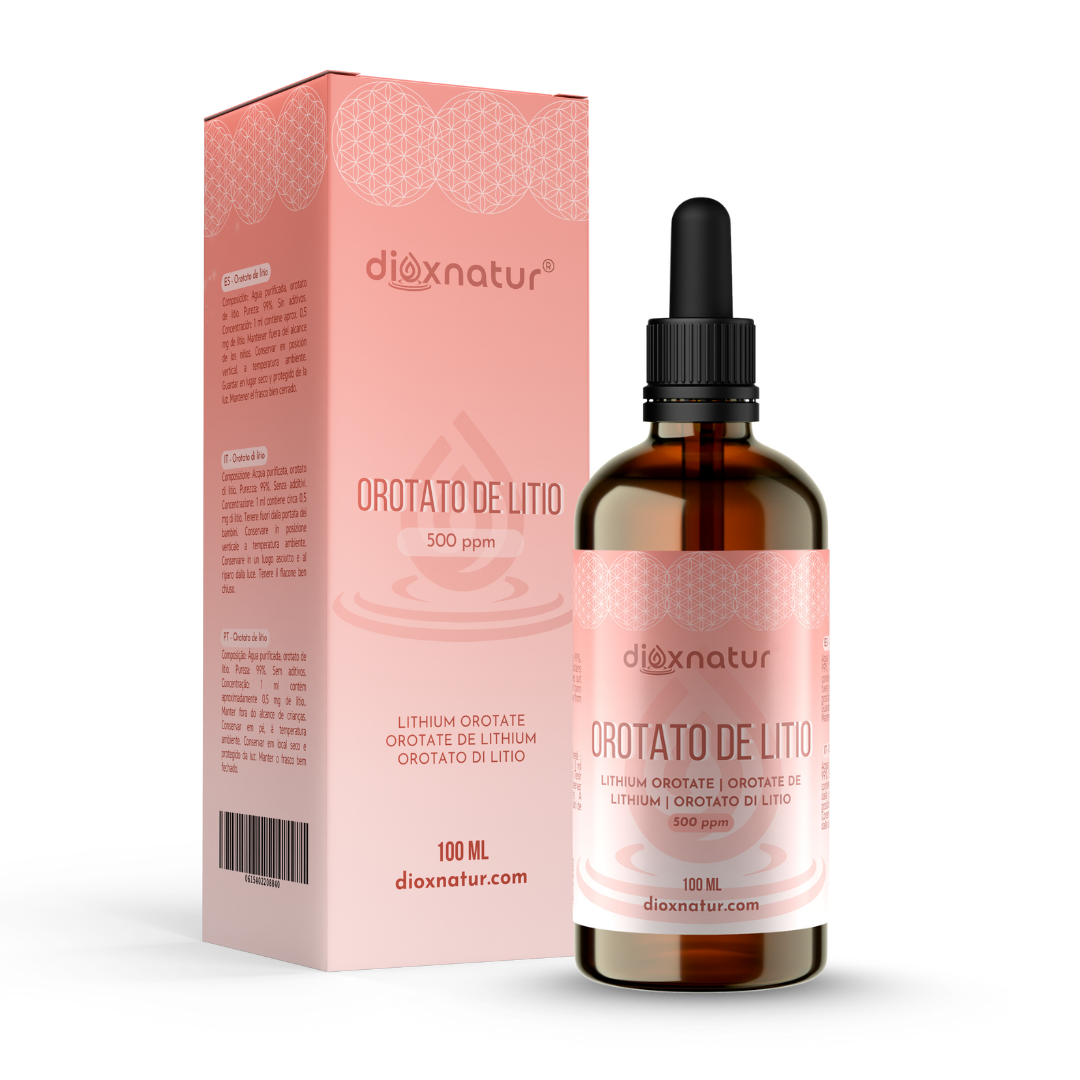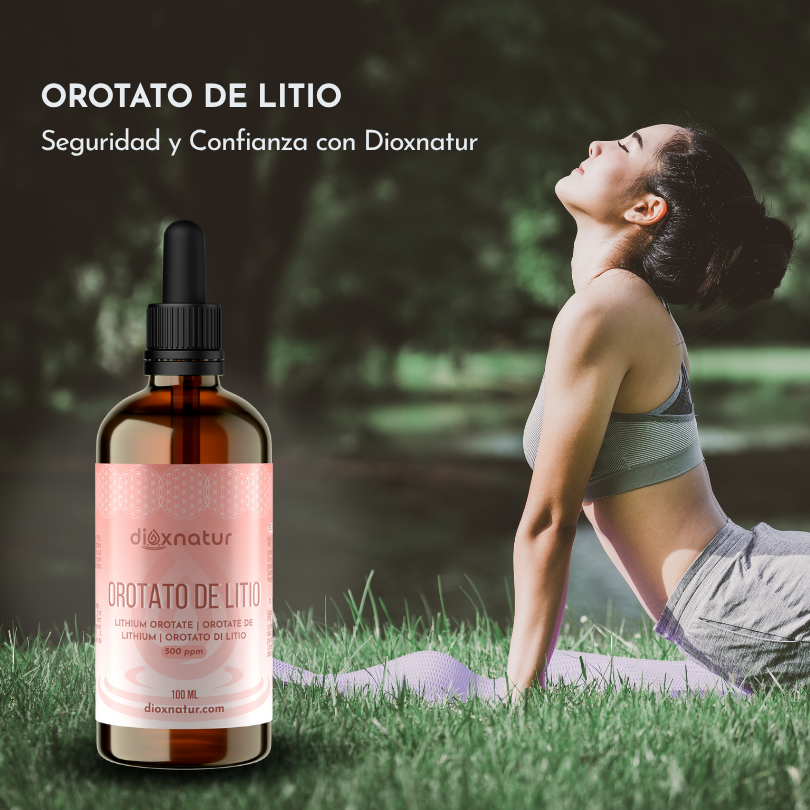


Lithium orotate is a special form of lithium that is generating increasing interest in research and healthcare. In this section, you will find comprehensive information, featured studies, and frequently asked questions, presented in a clear, accessible, and scientifically sound manner, so you can better understand what lithium orotate is and how its potential is being researched.
What is lithium orotate?
Lithium is an essential trace mineral that participates in the regulation of several biological processes, including:
-
Emotional balance and mood stability .
-
The protection of neurons against oxidative stress and inflammation.
-
Healthy functioning of memory and concentration .
Several studies have observed that populations with higher levels of naturally occurring lithium in drinking water have lower rates of depression, anxiety, and suicide , suggesting a positive role for lithium in mental health even at very low doses.
It is mainly used to promote emotional balance, improve mood and, in some cases, support cognitive function . Orotic acid is considered to facilitate the absorption of lithium at the cellular level, which would allow small amounts to be effective.
How long has lithium been used?
Lithium has been used for medicinal purposes since the 19th century. The earliest records, from the 1840s, show that it was used to treat gout, based on the belief that excess uric acid was the cause of many illnesses. Over time, its use expanded to the treatment of mood disorders, especially bipolar disorder , becoming one of the first effective mood stabilizers recognized by modern psychiatry.
Lithium orotate, a specific form of this mineral, gained popularity in the 1970s thanks to Dr. Hans Nieper , who promoted it as a milder and better-tolerated alternative to lithium, suitable for use in low doses.
How is lithium orotate used?
Lithium orotate is used in very low doses (often 1 to 5 mg of elemental lithium per day = 1–10 ml of the 500 ppm liquid solution) and, unlike pharmaceutical salts such as lithium carbonate or citrate, does not require a prescription in some countries outside the European Union. There, it is marketed as a dietary supplement intended to promote emotional balance, improve mood, and support cognitive function.
In contrast, in the EU, lithium orotate is not authorized as a food supplement and is offered exclusively for for laboratory use or for research purposes.
What differentiates lithium orotate from other forms of lithium?
Lithium orotate is distinctly different from other forms of lithium due to its composition, concentration, and use. Unlike lithium carbonate or lithium citrate, which are used in prescription medicine to treat bipolar disorder at high doses, lithium orotate combines lithium with orotic acid, a naturally occurring compound in the body.
This form contains much lower amounts of elemental lithium, so it is used in low doses (outside the European Union) mainly as a dietary supplement intended to support emotional balance, general well-being and cognitive function.
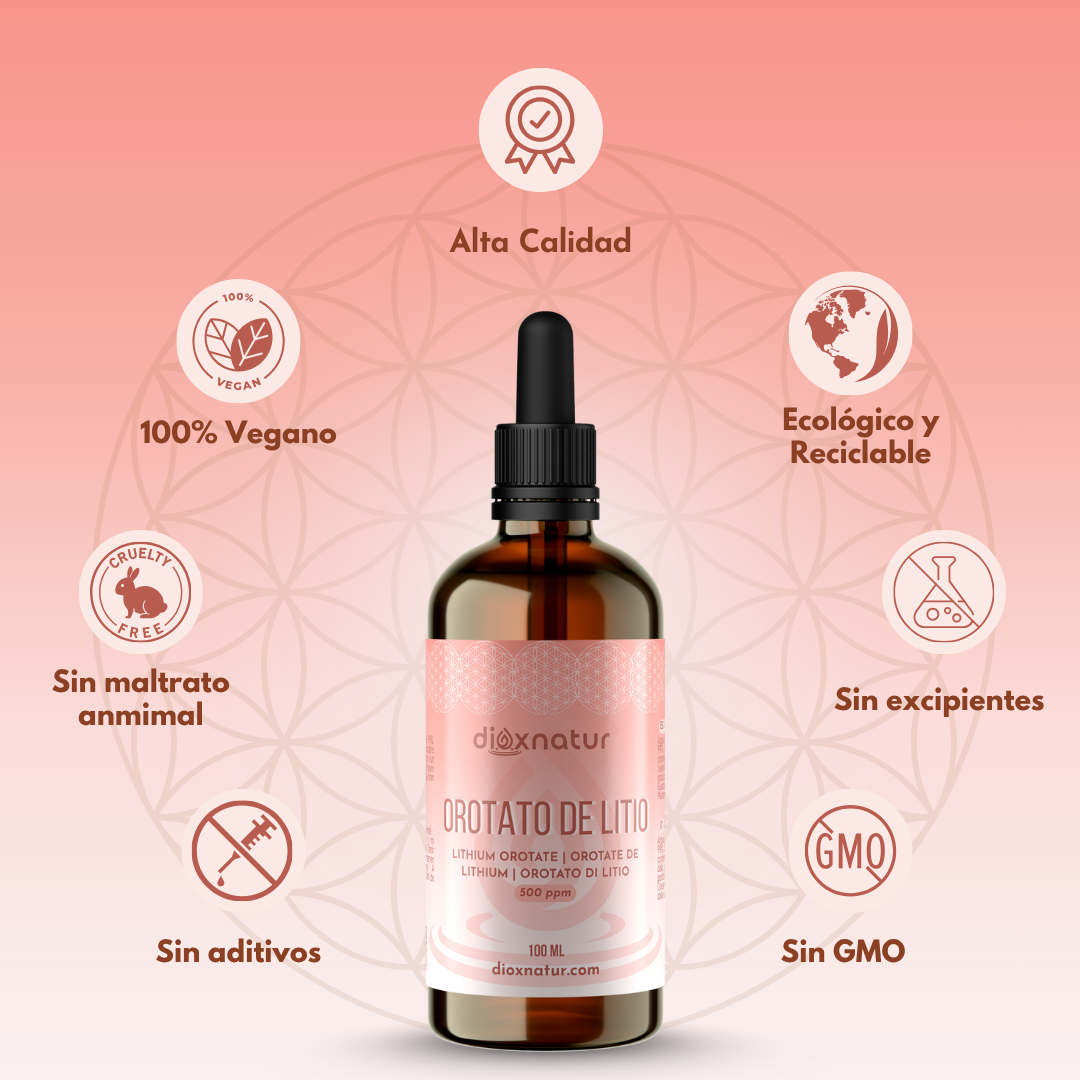
Furthermore, the high purity lithium orotate (over 99%) ensures greater stability and safety in its use, guaranteeing its quality and reliability for research or specialized formulations.

Is lithium orotate safe?
The safety of lithium orotate depends on the dose and the type of use. Unlike medical forms of lithium, such as carbonate or citrate, which are used in high doses and under medical supervision, orotate is used outside the EU in much smaller quantities, so its effect and safety are considered milder.
Even so, caution is advised in cases of :
-
Kidney problems,
-
Pregnancy or breastfeeding,
-
Treatments with other medications.
If you have any doubts, talk to a healthcare professional first.
How long does lithium orotate last?
Lithium orotate is a chemically stable compound, although its shelf life depends on the format and storage conditions.
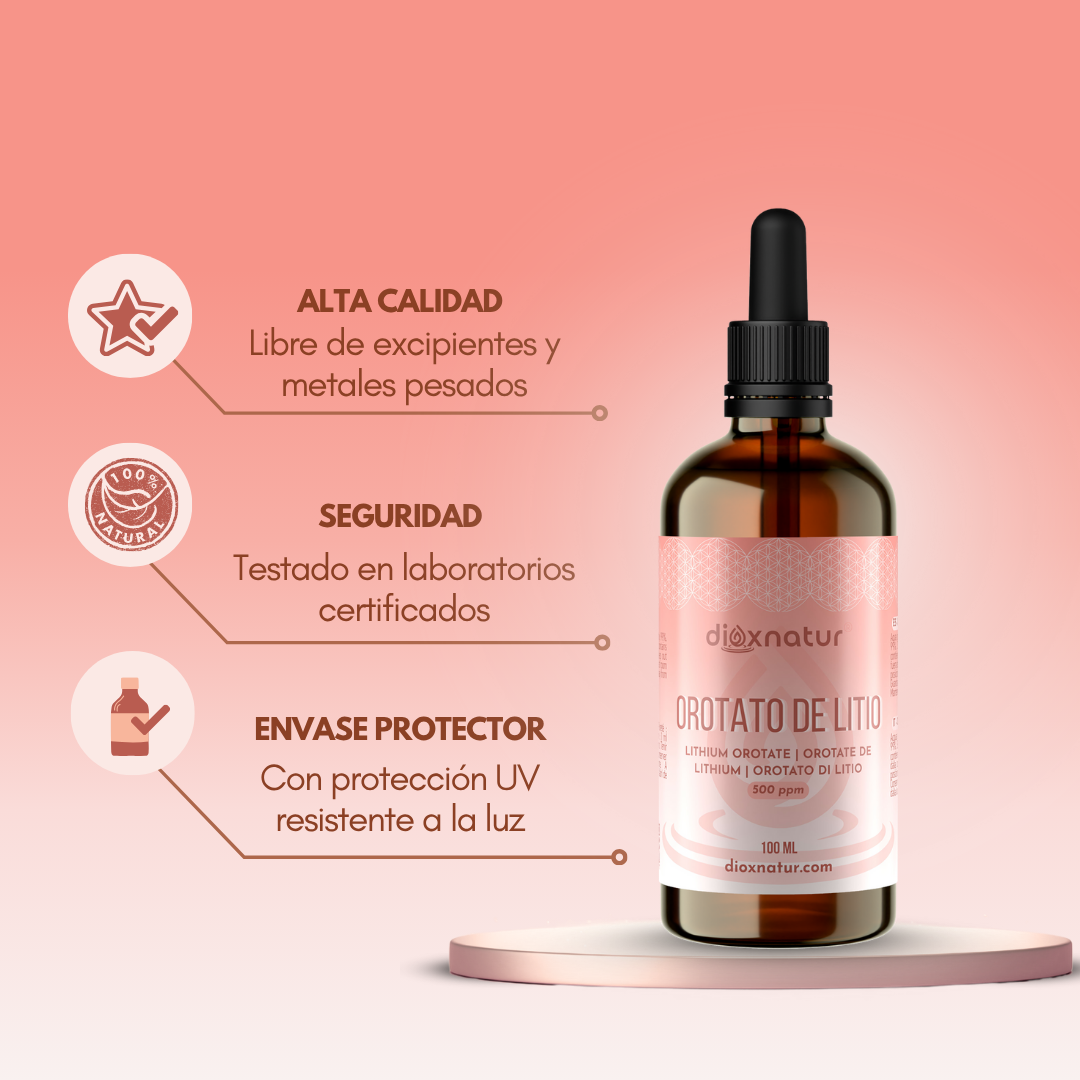
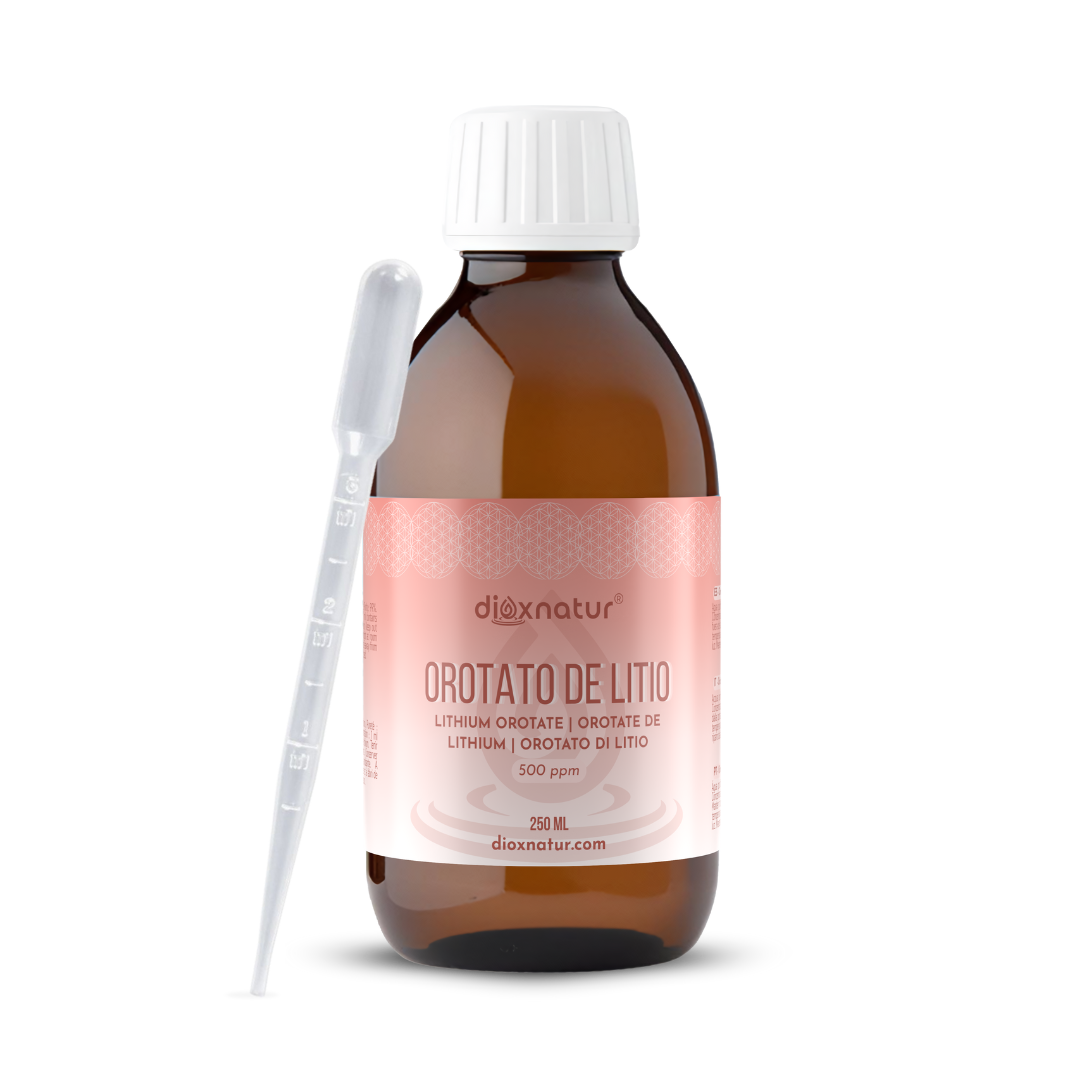
In the case of liquid lithium orotate, dissolved in distilled water and packaged in an amber glass bottle protected from light, the product can maintain its stability for up to 24 months if it has not been opened.
✅ Storage recommendations:
-
Store at room temperature, away from direct sunlight and excessive heat.
-
Amber glass helps protect it from UV radiation, preventing its degradation.
-
Keep the container tightly closed and protected from moisture.
Once opened, liquid lithium orotate can maintain its stability for between 6 and 12 months , provided it is handled hygienically and stored properly.
Studies on lithium orotate
Lithium has been the subject of medical research for over 180 years, and scientists continue to discover new mechanisms of action and potential applications. From its historical use in psychiatry to current approaches in neuroprotection and cellular health, this mineral remains one of the most promising trace elements in the field of research.
Today, there are thousands of scientific studies worldwide that analyze the properties and potential benefits of lithium, including lithium orotate.
Below, you will find a selection of studies and research summaries that highlight the most relevant findings on this compound and its potential for brain health and overall well-being.
Lithium orotate: better absorption and effectiveness at low doses
This study analyzed the brain's absorption of lithium using different compounds. The results showed that lithium orotate, even at very low doses, can reach concentrations up to three times higher in the brain compared to traditional lithium carbonate.
This difference could be explained by the role of orotic acid, which acts as a natural carrier and facilitates more efficient cellular absorption of lithium.
Possible advantage: greater efficiency with less burden on the liver and kidneys.
Conclusion: Lithium orotate could represent a gentler and more effective alternative.
Lithium and mood stabilization in bipolar disorder
Study: Long-term efficacy of lithium in bipolar disorder: a meta-analysis of randomized controlled trials.
This meta-analysis combined numerous long-term clinical studies with thousands of patients diagnosed with bipolar disorder. The results showed that lithium was significantly more effective than placebo, as it notably reduced the frequency of depressive and manic episodes.
In addition, patients treated with lithium showed a considerable decrease in relapses and greater sustained emotional stability, avoiding the mood fluctuations typical of this disease.
Conclusion: Lithium remains the gold standard treatment for bipolar disorder, thanks to its proven effectiveness in preventing relapses and stabilizing mood in the long term.
Can lithium reduce the risk of suicide?
Study: Lithium in suicide prevention in mood disorders: updated systematic review and meta-analysis (BMJ).
This systematic review with meta-analysis published in the British Medical Journal (BMJ) shows that, in people with mood disorders (such as depression or bipolar disorder), lithium treatment is associated with a significantly lower risk of suicide and unexplained deaths.
The protective effect would be due both to the stabilization of mood and to a possible reduction in impulsivity and aggressiveness.
Conclusion: Lithium stands out as one of the few drugs with solid evidence in suicide prevention, a finding also relevant to the public health debate.
Does lithium orotate help with dementia? Brain protection: Lithium may preserve the structure of the hippocampus.
The hippocampus is a key brain region involved in memory and learning, and one of the most vulnerable to neurodegenerative diseases such as Alzheimer's. This long-term MRI study in patients with bipolar disorder showed that, during lithium treatment, hippocampal volume remained stable and even increased slightly.
In addition, an improvement in memory performance was observed in some participants , suggesting a possible neuroprotective effect of lithium.
Conclusion: Lithium may not only alleviate the symptoms of bipolar disorder, but also protect brain structure and promote long-term neuronal health.