

Lithium is a surprisingly versatile element used in batteries, nuclear reactors, food , and medicines , making it a true all-rounder. In medicine, it was the first effective treatment for psychiatric disorders , marking a milestone in the history of mental health. Studies are currently underway to determine its potential effectiveness in treating Alzheimer's disease. and other neurodegenerative diseases. Furthermore, lithium has been found to provide health benefits even in very low amounts . More and more experts agree that it could be an essential trace element , playing an important role in preventing various diseases and maintaining the body's balance.
What is lithium?
Lithium (Li) is a chemical element that belongs to the group of light metals , along with sodium, magnesium, and aluminum . In nature, it is not found in its pure state, but rather combined in water-soluble salts , present in water, rocks, plants, animals, and even the human body .
Due to its widespread distribution and relative scarcity, lithium extraction is complex . The main producing countries are Australia, Chile, and China , which account for the majority of the world's reserves and mining operations.
Lithium is a strategic and highly sought-after resource today , particularly due to its essential role in the manufacture of rechargeable batteries used in mobile phones, laptops, vehicles, and electric bicycles . Furthermore, this lightweight metal plays a key role in nuclear fusion reactors and in the pharmaceutical industry , where it is used to treat mood disorders.
Finally, some specialists suggest that lithium could be considered an essential trace element , since it could contribute to the balance and health of the body when found in very small quantities.
Types of lithium and their differences
There are several types of lithium , distinguished by their use, concentration, and purpose . In medicine, the most widely used is lithium carbonate , used under prescription to treat bipolar disorder and other psychiatric conditions , thanks to its mood-stabilizing effect. Other salts, such as lithium citrate , with similar properties, are also used.
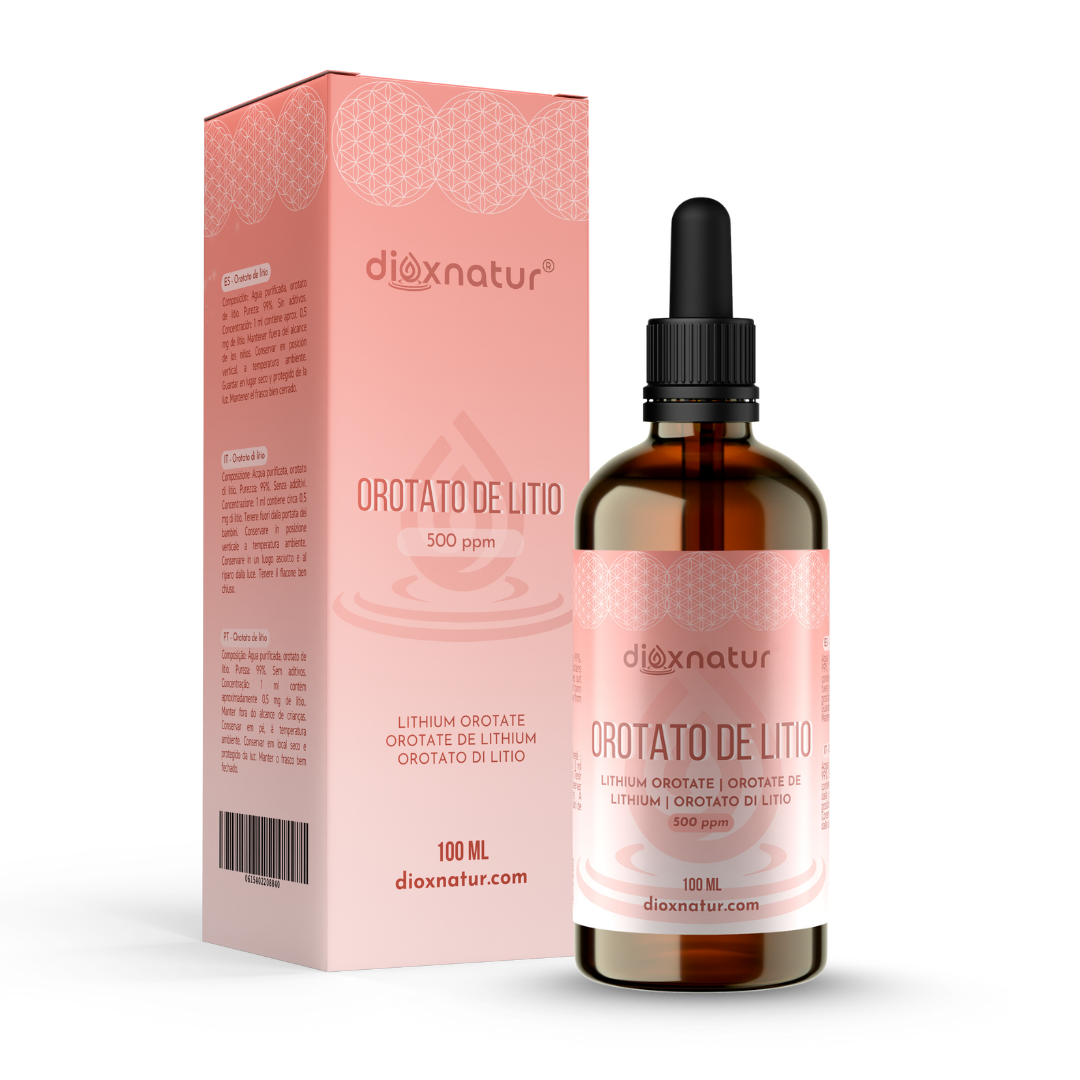
Lithium orotate, on the other hand, contains much lower doses of this mineral. It is associated with potential benefits for emotional balance, concentration, and cognitive health , and is still under study .
The regulatory status of lithium orotate varies between regions : in the United States it is legally marketed as a dietary supplement , while in Europe its sale is more restricted and it is not approved as a food supplement .
Is lithium a micronutrient?
Scientists are still debating whether lithium , like magnesium , should be considered an essential trace element. and, therefore, necessary for the proper functioning of the body. For years, the prevailing position was that this element was not essential for life .
However, recent research suggests that lithium may be a micronutrient , and its broad spectrum of effects certainly supports this.
According to research, lithium affects the central nervous system even in microdoses absorbed through food and drinking water, influencing physiological processes.
Ultimately, the only argument against it is that, to date, no fundamental biological function of lithium has been identified , the absence of which prevents life, as is the case with recognized essential trace elements .
How does lithium work?
In the treatment of mental disorders such as bipolar disorder or severe depression , doctors use high doses of lithium , which can reach more than 100 mg daily .
In contrast, the lithium we obtain naturally through water or food is found in very small amounts , typically less than 1 mg per day . These doses are too low to treat serious illnesses, but they may have beneficial health effects .
In fact, some recent research shows that even small amounts of lithium can protect the nervous system and have a positive effect on mood . This is because lithium can reduce inflammation , combat oxidative stress , and regulate brain function .
When consumed in the form of soluble salts , lithium is easily absorbed in the intestine and distributed throughout the body . However, scientists still don't fully understand how it works in the body.
To date, no direct relationship has been found between the amount of lithium present in food or water and the development of chronic diseases over time. However, some studies indicate that consuming too little lithium could be linked to emotional and behavioral problems , suggesting that this mineral could be important for mental balance and overall well-being .
More lithium in the water, fewer suicides
Although lithium, which occurs naturally in drinking water , is present in very small amounts , some studies suggest it may benefit mental health . Drinking about two liters of water a day provides only a fraction of the medical dose used in treatments , but it still appears to have positive effects.
For example, an adult who drinks about 1.3 liters of water a day could receive about 0.2 mg of lithium , even in areas where its concentration is higher. Despite this very low amount, research has found that in places with more natural lithium in the water, there are fewer cases of suicide, fewer hospitalizations for mental health problems, and less aggressive behavior .
These results suggest that lithium could be an essential mineral for the human body, necessary in small amounts to help maintain emotional balance and mental stability .
Does lithium work against Alzheimer's?
In recent years, several scientific studies have found evidence that lithium , when consumed in adequate amounts through diet or water , could help delay the progression of Alzheimer's and even have a preventive effect .
According to a 2021 review , low-dose lithium may stimulate the formation of new neurons in the hippocampus , the area of the brain linked to memory and learning, and improve cognitive function . In Alzheimer's patients, a slowing of mental decline was observed after three months of lithium treatment .
Another study showed that microdoses as small as 0.3 mg a day can be effective : patients receiving them remained stable for 15 months , while those taking a placebo continued to worsen . Furthermore, research published in 2024 noted that lithium may also have positive effects on Parkinson's disease .
Some experts, such as German geneticist Michael Nehls , argue that a lithium deficiency may be linked to the development of Alzheimer's . According to Nehls, consuming small daily doses of lithium —for example, about 0.6 ml through drinking water —could have a significant therapeutic effect and help protect the brain over time .
Does lithium in drinking water prevent cancer?
Several scientific studies have found a possible relationship between lithium and a reduced risk of cancer . Some observational studies in patients with bipolar disorder have shown that those treated with lithium have alower incidence of certain types of cancer .
Furthermore, a cohort study published in 2025 , which included over 252,000 people , revealed that higher levels of lithium in drinking water were associated with a lower risk of developing cancer .
At the biological level, lithium is known to influence several enzymes in the body, such as glycogen synthase kinase 3 , which is involved in cell growth and division . This mechanism could explain why lithium may have a protective or anticancer effect .
For this reason, some experts believe that insufficient lithium intake could affect the body's balance and contribute to a deficiency of an essential trace element , which is necessary for maintaining good long-term health.
Is lithium orotate toxic?
For a long time, lithium orotate was considered toxic , as some Studies in the 1970s showed that it could affect kidney function in animals . However, it was later discovered that the doses used were extremely high , far above what would be safe for humans. For this reason, research on lithium orotate was halted for years and did not resume until the 2020s .
Recent research indicates that there are no risks of toxicity When lithium orotate is used in low doses and appropriately , its side effects are minimal , and it can promote calmness, improve stress response, and reduce impulsivity .
A survey in the UK with 211 participants showed that those taking 10 mg daily of lithium orotate or aspartate They experienced improvements in mood , reduction in anxiety , and increased mental clarity and concentration .
Dr. Michael Nehls , an expert in molecular genetics, takes a daily dose of 2 ml of lithium orotate , which is considered a safe and beneficial amount to support mental and emotional balance.
Lithium content in food and water
As with other micronutrients , the amount of lithium present in food varies depending on several factors, such as the plant species , the type of soil and, above all, the geographical location .
Lithium concentrations in soil can range from 0.1 to 400 mg/l , which explains the wide differences in its content in food. For example, some tomatoes may contain between 2 and 3.5 mg of lithium per kilogram , while others barely reach 0.002 mg/kg , depending on the region where they are grown.
A 2013 Spanish analysis showed that nuts are particularly rich in lithium, with an average of 0.88 mg per 100 g . Cereal products contain around 0.44 mg , fish around 0.31 mg , and vegetables around 0.23 mg per 100 g . In contrast, fruits such as citrus fruits, apples, and bananas have lower levels, around 0.135 mg , while dairy products provide around 0.05 mg , and mushrooms , just 0.019 mg per 100 g .
Although these values may vary depending on the exact type of food, they demonstrate that it is also possible to obtain lithium in significant amounts through the daily diet .
Lithium content in water
The amount of lithium in water depends primarily on natural rock erosion and weathering processes . Generally, concentrations range from 0.0046 to 0.219 mg per liter .
Seawater contains the highest levels, between 0.14 and 0.2 mg/l , while freshwater has much lower levels—for example, between 0.00016 and 0.0045 mg/l in rivers . As a result, marine organisms tend to accumulate more lithium than those living in freshwater environments.
Lithium in drinking water
In some regions of the world, such as Greece, England, Italy, the United States (especially Texas) , and Japan , relatively high levels of lithium have been found in drinking water , with concentrations close to 0.2 mg per liter . In some places, these values can reach 5.2 mg/l , although in most European countries the lithium content in tap water is much lower.
Concentrations vary considerably by region: for example, in Austria they can reach up to 1.3 mg/l , while in Denmark they rarely exceed 0.03 mg/l . Despite these differences, Europe still lacks specific regulations requiring monitoring of lithium levels in surface or drinking water, so there are no official reference values .
Lithium in mineral water
Mineral waters can also naturally contain lithium , and its concentration varies depending on the source. Some studies have found relatively high values: for example, one Slovak brand reached almost 10 mg/l . Overall, however, the average lithium content in European mineral water is just 0.001 mg/l .
However, there are mineral waters with higher levels , such as Thalheimer Heilwasser (Austria, 0.4 mg/l ), Gerolsteiner Ursprung (Germany, 0.45 mg/l ) or Staatl. Fachingen (Germany, 0.77 mg/l ). In Switzerland , the well-known Zurzacher Mineralwasser once contained 1.3 mg/l , although it has no longer been available since July 2025 .
Lithium in other beverages
Lithium is also present naturally in other beverages , although at much lower concentrations than in mineral water. A study analyzing 319 samples found the following averages:
-
Red wine: 0.018 mg/l
-
White wine: 0.014 mg/l
-
Beer and fruit juices: around 0.007 mg/l
These data show that, although the quantities are small, lithium is widely distributed in different foods and drinks , thus contributing—naturally and discreetly—to the daily intake of this mineral .
Lithium absorption
It is estimated that between 66% and more than 90% of the lithium we consume each day comes from cereals and vegetables , while the remainder comes from animal foods, drinking water and other beverages .
Therefore, a vegetarian or vegan diet usually provides more lithium than a meat-based diet, especially if it includes walnuts or almonds , which are rich in this mineral .
The amount of lithium a person ingests per day can vary greatly: it can range from a few micrograms (µg) to several milligrams (mg) , depending on the natural concentration of lithium in food, water, and the environment .
In Europe , the average lithium intake is quite low . For example, one study found that students in Poland consumed about 0.0107 mg per day , while adults in Belgium consumed about 0.0086 mg daily .
Additionally, micronutrient requirements vary among individuals and can change due to various factors such as diet, stress, lack of sleep, physical activity, certain medications, or chronic illnesses . All of these factors affect the body's ability to absorb and utilize lithium and other nutrients .
How much lithium does a person need?
Although lithium is not officially recognized as an essential micronutrient , some experts recommend a daily intake of approximately 1 mg for a 70 kg adult (equivalent to 14.3 µg per kilogram of body weight ).
Other specialists consider this figure to be a conservative estimate , as it does not take into account individual differences or the specific needs of each person , so a slightly higher consumption may be necessary to maintain a good mental and physical balance .
How are lithium levels in the blood measured?
The normal level of lithium in the body can only be accurately determined by a complete blood test with EDTA , using the ICP-MS (inductively coupled plasma mass spectrometry) technique , which offers high sensitivity .
The traditional method, based on photometric measurement of serum lithium , is used to monitor high-dose medical treatments, but it is not sensitive enough to detect natural physiological lithium levels in the blood. Therefore, it is only useful for assessing therapeutically high concentrations , not those normally found in the body.
Lithium in medicine
Lithium was first used in the 19th century to treat mental disorders , although at that time its use was limited due to serious side effects and even deaths , leading to its temporary ban in some countries, such as the United States , in the mid-20th century. Even so, research into its therapeutic properties continued .
Later, Australian scientists demonstrated that lithium salts could be highly effective in treating manic episodes , marking a turning point in modern psychiatry. Thanks to these results, lithium became the first effective medication for treating psychiatric disorders . In 1970 , the United States became the 50th country in the world to officially approve its medical use.
Currently, lithium salts , especially lithium carbonate (Li₂CO₃) , are among the most common treatments in psychiatry, particularly for bipolar disorder and other mood disorders . Although high doses are used , which can cause significant side effects , deaths from poisoning are very rare , and lithium remains considered one of the most effective and studied drugs in mental health.
1. Mental illnesses
Lithium's most important medical application is the treatment of bipolar disorder , a condition characterized by alternating episodes of mania and depression . This mood stabilizer is primarily used to treat acute mania and manic episodes , although it can also be used in cases of schizophrenia and resistant depression .
In addition, lithium is used preventively to reduce the risk of relapse in people with manic-depressive disorders . Several studies have shown that lithium significantly reduces the risk of suicide in patients with serious mental illness, reinforcing its therapeutic value.
The usual therapeutic doses of oral lithium are between 600 and 1200 mg of lithium carbonate (Li₂CO₃) per day, which is approximately equivalent to 113–226 mg of pure lithium . However, some studies suggest that lithium may have a stabilizing effect even at lower doses , and that some patients show a high positive sensitivity to treatment, so much so that some experts speak of a possible “lithium deficiency” in the body.
Although its exact mechanism of action is not yet fully understood, lithium is known to influence communication between neurons , particularly intracellular neurotransmission (the exchange of chemical signals at synapses). Therefore, the central nervous system is considered its primary site of action .
2. Cluster headaches (prophylaxis)
Cluster headaches are a type of extremely intense headache that usually recurs on one side of the head , especially in the temple area and around the eyes . Often described as some of the most severe pain a person can experience, this pain occurs in cyclical attacks or episodes .
Several clinical studies have shown that lithium can be effective in preventing these episodes , reducing their frequency and intensity. In Germany , lithium salts — primarily lithium carbonate and lithium acetate —are the only medications officially approved for the preventive treatment of cluster headaches .
The most common daily dose is 2 × 400 mg of lithium , although this should be titrated individually under medical supervision. As with other therapeutic uses of lithium, there are potential side effects , and regular monitoring of blood pressure and lithium levels is important to avoid the risk of toxicity and ensure safe and effective treatment.
3. Lithium and bone health
Lithium tends to accumulate in bones , so its influence on bone health has long been investigated . People with depression or bipolar disorder have been observed to have a higher risk of developing osteoporosis , possibly because these disorders can affect their diet and decrease their motivation to exercise regularly.
A 2022 study looked at the effects of lithium on the bones of patients with bipolar disorder and found that those receiving lithium had a significantly lower risk of osteoporosis .
Lithium appears to stimulate the activity of osteoblasts , the cells responsible for forming new bone , and at the same time inhibit the action of osteoclasts , which are the cells responsible for breaking down bone tissue .
Additionally, BDNF — a neuron growth factor that lithium boosts in the brain—also appears to promote bone growth and regeneration . In animal studies , lithium was found to help speed fracture healing .
However, both these studies and those conducted with human patients used high therapeutic doses , much higher than those found in dietary supplements or in lithium naturally present in food and water . To date, there is no conclusive research on the effects of lithium on bones when taken at low doses .
Side effects of lithium
In low doses , such as those found in water or food , lithium can have positive health effects. However, in high doses , such as those used in the treatment of bipolar disorder , it can cause side effects .
The most common are weight gain , hand tremors , nausea , diarrhea , fatigue , excessive thirst , increased urination , and thyroid dysfunction . Circulatory disturbances or changes in blood count may also occur .
In general, these effects are reversible if detected early and the dose is adjusted or discontinued under medical supervision.
Lithium orotate during pregnancy and breastfeeding
In the case of lithium orotate , there are insufficient studies on its safety during pregnancy or breastfeeding . Although it contains much lower amounts of lithium than prescription medications for bipolar disorder, for example, it cannot be considered completely safe for pregnant or breastfeeding women due to a lack of scientific evidence .
As a precaution, its use is not recommended at these stages, unless expressly indicated by a specialized physician , who will assess the possible benefits versus the risks for the mother and baby.