

For decades, scientists have wondered what triggers Alzheimer's and why some people with brain signs of the disease never develop dementia.
Now, a team from Harvard Medical School has found a possible answer: lithium deficiency in the brain .
The natural role of lithium in the brain
The study , published in the journal Nature , demonstrates for the first time that lithium is produced naturally in the human brain. This mineral not only protects neurons and maintains their normal function, but also helps prevent neurodegeneration.
The findings are based on ten years of research, which combined experiments with mice, analysis of human brain tissue, and blood samples from people with varying levels of cognitive health.
Researchers discovered that lithium loss in the brain is one of the first changes leading to Alzheimer's disease . In mice, a similar decrease accelerated the appearance of amyloid plaques , memory decline , and other typical signs of the disease.
Lithium depletion: an early sign of Alzheimer's
How the relationship was discovered
Professor Bruce Yankner , of Harvard's Blavatnik Institute, began studying lithium while investigating the neuroprotective protein REST.
To analyze its levels in the human brain, his team collaborated with the Rush Memory and Aging Project in Chicago, which has brain tissue samples donated by thousands of people with varying degrees of cognitive health.
Studying brains in the early stages of Alzheimer's was key. As Yankner explained, observing an advanced brain “is like looking at a battlefield after a war”: there is so much damage that it is difficult to know where it all started.
Results of the analyses
Led by researcher Liviu Aron , the team used advanced mass spectrometry to measure about 30 different metals in the brain and blood of the participants.
The result was conclusive: lithium was the only metal that showed clear differences between the groups.
People with healthy brains had high levels of lithium, while those with cognitive impairment or Alzheimer's showed very low levels.
These results were confirmed by analyzing samples from various brain banks across the United States. According to Yankner, this brings together decades of clinical observations and offers a new perspective for diagnosing and preventing Alzheimer's disease.
Lithium, a “missing link” in Alzheimer’s disease
Beyond beta amyloid and tau protein
Until now, theories about Alzheimer's have focused on the accumulation of beta amyloid, tau tangles, and the loss of protective proteins such as REST.
However, none of these explanations fully covered why some people develop the disease and others do not, even with similar risk factors.
The new study suggests that lithium could be the missing link . Its deficiency disrupts basic brain functions and could trigger the processes that lead to memory loss.
Furthermore, these results are consistent with previous studies showing that higher levels of lithium in drinking water are associated with lower rates of dementia.
An essential nutrient for the brain
For the first time, scientists have confirmed that lithium occurs naturally in the human brain , even in people who have never received lithium treatment. This allowed them to define normal levels of lithium in the brain and demonstrate that it plays an essential biological role, comparable to that of nutrients like iron or vitamin C.
“This is the first time it has been shown that lithium has a natural role in the brain, without needing to be administered as a drug,” Yankner explained.
Lithium loss and its effects on the brain
Brain changes observed in experiments
When mice were fed a low-lithium diet, their brain lithium levels dropped to levels comparable to those seen in Alzheimer's patients. This led to brain inflammation , loss of connections between neurons , and cognitive decline —symptoms that reflect the disease process.
In animal models of Alzheimer's disease, lithium deficiency accelerated the formation of beta-amyloid plaques and neurofibrillary tangles, as well as reducing the brain's ability to clear neuronal debris. It also affected genes associated with Alzheimer's risk, including the well-known APOE gene.
Lithium orotate recovery
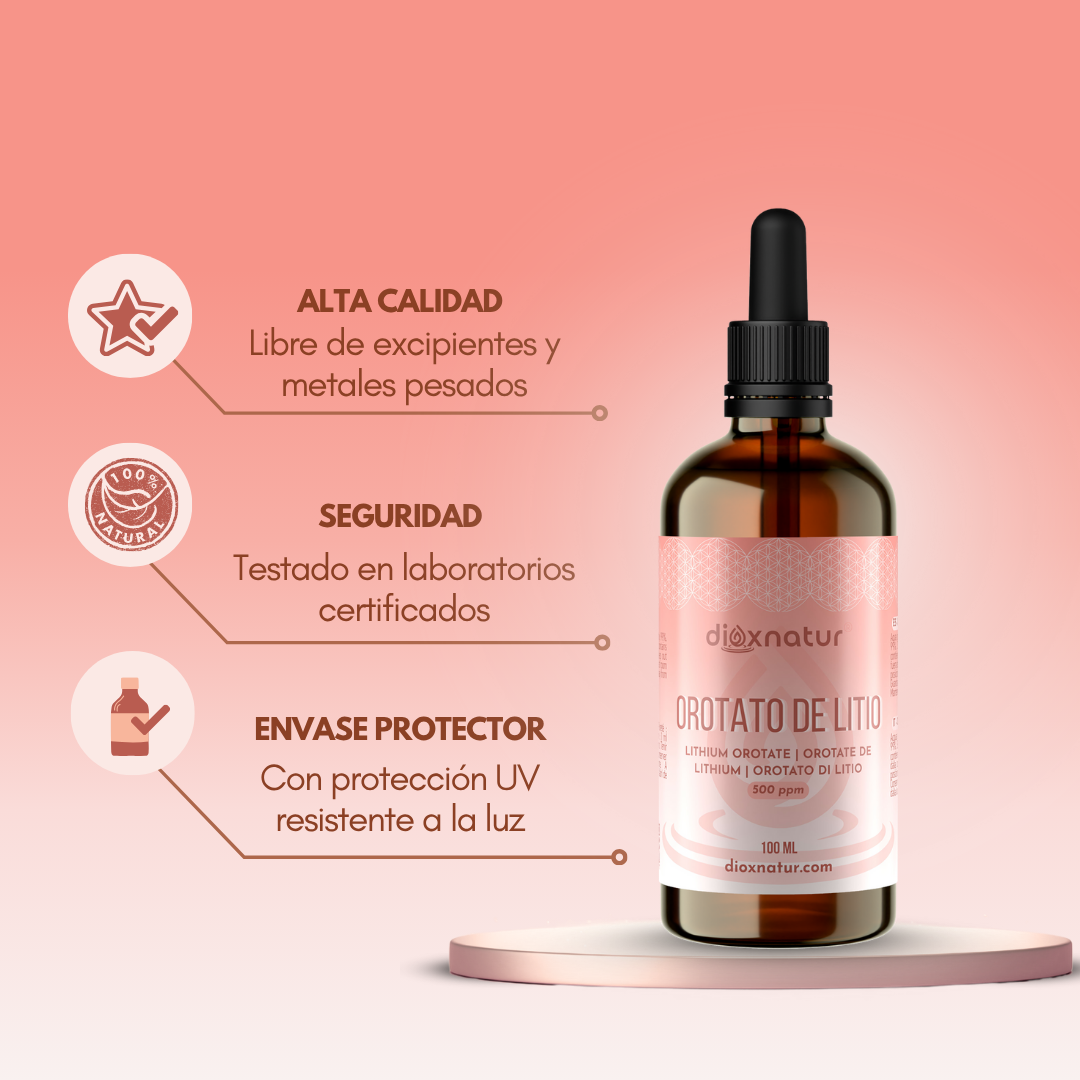
When scientists replenished lithium using lithium orotate dissolved in water , mice regained memory and brain function , even in advanced stages of the disease.
Furthermore, maintaining stable lithium levels from an early age prevented the development of Alzheimer's disease .
“Lithium has a broad effect on the different manifestations of Alzheimer’s. I haven’t seen anything like it in all my years of work,” Yankner stated.
A promising new avenue for treating Alzheimer's
Low dose, big effect
Although there are already some clinical trials with lithium for Alzheimer's, these used traditional forms such as lithium carbonate, which can be toxic in high doses, especially in older people.
The Harvard team discovered that the Beta-amyloid binds to conventional lithium, preventing it from working. To address this, they developed a screening platform that identified compounds capable of evading beta-amyloid, with lithium orotate emerging as the most effective.
Yankner explained that lithium orotate It works at doses a thousand times lower than therapeutic doses, enough to restore natural brain lithium levels without causing toxicity. Mice treated for almost their entire lives showed no adverse effects.
Towards early detection and prevention
If the results are confirmed in humans, measuring lithium levels in the blood could help to Identifying people at risk of Alzheimer's long before symptoms appear is crucial. Furthermore, studying lithium levels in cognitively healthy older adults could establish an optimal range for brain protection.
Yankner is optimistic and believes the results are very promising and that lithium orotate or similar compounds could soon advance to clinical trials and change the course of Alzheimer's treatment.
“My hope is that lithium will do something more profound than current therapies: not just slow the decline, but reverse cognitive damage and improve patients’ quality of life,” Yankner concluded.